
Some thoughts on effective training
What does balance mean?

I recently had a call with an athlete I coach where we talked about balance in training. It inspired me to expand my thoughts on the topic, and how it relates to my philosophy of sport and performance in general.
The question we were trying to answer together was essentially: what does a healthy training balance look like? Especially when one is super motivated for progress and achieving a certain level of performance. This particular athlete, like many type-A endurance athletes, has trouble with the idea of rest and taking days off from training and has the preconceived notion that more is better.
As we shift into a new season and perhaps begin building our goals and plans for 2025, I wanted to share a little bit of my approach to coaching, training, and performance, and offer some bits of advice to incorporate into your routine. Let’s see where this goes.

What is the purpose of training?
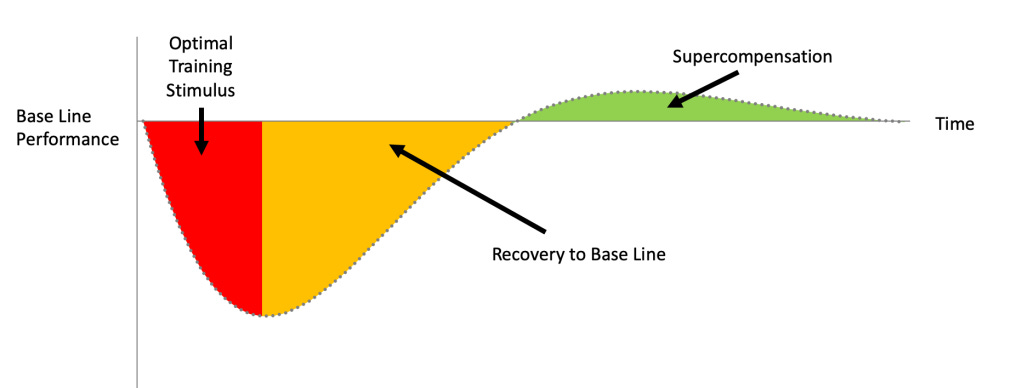
At its core, endurance training is stress applied to our physiology that results in positive adaptations that make us more capable of performing the movements of our given sport. The adaptation that occurs comes from the basic equation of stress + rest = growth. It’s really the recovery process that allows the adaptation process to occur.
The reality of endurance training is that it’s a long game. It takes years to develop aerobic fitness, and long-term consistency is the secret. It’s tempting to rush the process and seek instant gratification with the “more is more” approach. Social media, including Strava, and the endless access to online comparison make this an easy trap to fall into.
It’s also challenging when we build a lot of our identity around our sport and the routine of training. We feel lost/lazy/unproductive when we take time off to rest, feeling as though we’re missing opportunities to progress. We must be careful to avoid this mindset, and instead view rest as an important part of the training process. I urged this particular athlete to reframe the often compulsive need to exercise to instead embrace intentionality and structure around training, of which rest is key. If we're constantly applying stress without the appropriate rest, we stagnate and don’t grow our ceiling - we stay always a little bit tired.
Incorporate variety.
This is also why my philosophy around sport and training is grounded in the idea of versatility. I’ve been endurance training very consistently for 18 years, but I’ve only recently felt like I'm reaching my peak as an athlete since embracing the Mountain Athlete lifestyle - shifting with the seasons and mixing up the movement styles. An important aspect of effective training is exposing ourselves to novel types of stimulus, especially if we aren’t making the progress we seek. If we are siloed into one sport, or one type of training style and too rigid in our routine, our physiology gets used to it and can’t adapt and grow. For those of us lucky enough to live in a mountainous environment and multiple seasons, I encourage including many types of training into the routine to build a stronger base of durability and variety to grow as athletes.
This is all dependent on goals, though. The caveat here is none of this matters if we aren’t clear on what we’re training for. If your primary focus is turning professional in a given sport, targeting a specific race, or just being a well-rounded endurance athlete who can excel in many types of sports, the approach changes. So get clear on what you want to accomplish, and train with specificity.
Don’t be a hero.
We have to earn the right for hero workouts. Again - it’s tempting to rush the training process and try to accelerate the adaptations. But it’s much more effective and sustainable to build the house slowly but surely, laying the foundation of aerobic capacity which then supports the layers of bricks and allows for a nice big ceiling for our potential. By pushing too hard too quickly we undermine the process of supercompensation and set ourselves up for fatigue and yo-yo’ing between doing too much and forcing more rest. There’s a time and place for the epic workouts, but they must be earned.
In a similar vein, we must have the discipline to go easy most of the time. Building our aerobic capacity requires a lot of time spent at low intensities to accrue the endurance adaptations for this foundation. Far too many athletes push a little bit too hard too often, which again undermines recovery and stunts the long game. To quote legendary running coach Steve Magness’ training philosophy: “mostly easy, occasionally hard, vary it up, and very seldom, go see God.”
Training is pointless without fuel.
My coaching philosophy is also very rooted in the importance of nutrition. An absolutely essential component of effective training is providing the fuel for these adaptations to occur, and in my experience coaching athletes in both training and nutrition this is a big challenge. Recovery and adaptation happens when we rest, but also when we eat. In order to accomplish the consistency and sufficient stress of training, we have to provide the building blocks for the body to do its thing to grow and get stronger This comes down to matching our caloric intake with the energy output. I’ve been a strong advocate for this for many years, discussing the link between overreaching/overtraining and low energy availability, which there’s good evidence for. If you’re not making the progress you seek in training, it could very well be related to underfueling, particularly from carbohydrates.
Athletes who are often sick, injured, or plateauing in their performance might be caught in the vicious cycle of chronic (whether intentional or not) underfueling, leading to poor adaptation and recovery, which then leads to an urge to traing harder. This is why nutrition is so closely linked with overtraining.

As we can see, there’s a lot going on. But it’s actually quite simple. Being an athlete requires work, but it’s a really fun puzzle to fit together. The beauty and the curse is that there are no shortcuts to reaching our potential. It comes down to consistently doing the work, embracing the long game, and taking care of ourselves to grow as humans and athletes. I urge you to try and insulate yourself from the noise of influencers and quick-fix solutions, the comparison trap, and the slippery slope of putting too much identity into your sport or performance.
Build the house. Brick by brick.
I have a few spaces available for 1:1 coaching in both training and nutrition if you’re interested in incorporating more structure and guidance in your own process. Please reach out with questions if you want to learn more!