


It was relentless, the rain. Pouring in sheets as we left the coast in Antalya up into the mountains, hundreds of riders dressed in waterproof clothes departing into the unknown of a first-time event. Even the best clothing cannot withstand the power of nature’s onslaught. The grit and mud and damp would burrow itself into any vulnerable place on our bikes and our bodies. Pruned hands. Squealing brake pads.
This is a story of the inaugural Taurus Mountain Race: 1,460 kilometers from the Mediterranean into the remote landscapes of Türkiye’s high country. But it’s also a story of questioning, of change, of decisions and doubts. Time and experience were both compressed and accelerated together in a few days of riding mountain bikes through challenging terrain and weather, ultimately brought to an abrupt end by the powers of nature and the athlete’s fragile place within it.
Through the four days I was out there on the route, many questions swirled in my mind, and even more now many days removed. Why do we glorify athletic suffering? Where is the line between difficulty and danger? When does competition become clouded by ego and the ephemeral satisfaction of social media likes? How far will we go to remain relevant in a world of the next epic thing? I think I learned more about myself as an athlete in those four days than any other race.
There is much discussion about this race after the fact spanning differing opinions on the outcome. Long before the race was cancelled midway through, I was questioning my own place in it. Who I am as an athlete, and what it is I’m actually looking for through this expression of movement. For me, writing is the closest I can get to unraveling these swirling thoughts, so I’ll give it a go.
The Storm.
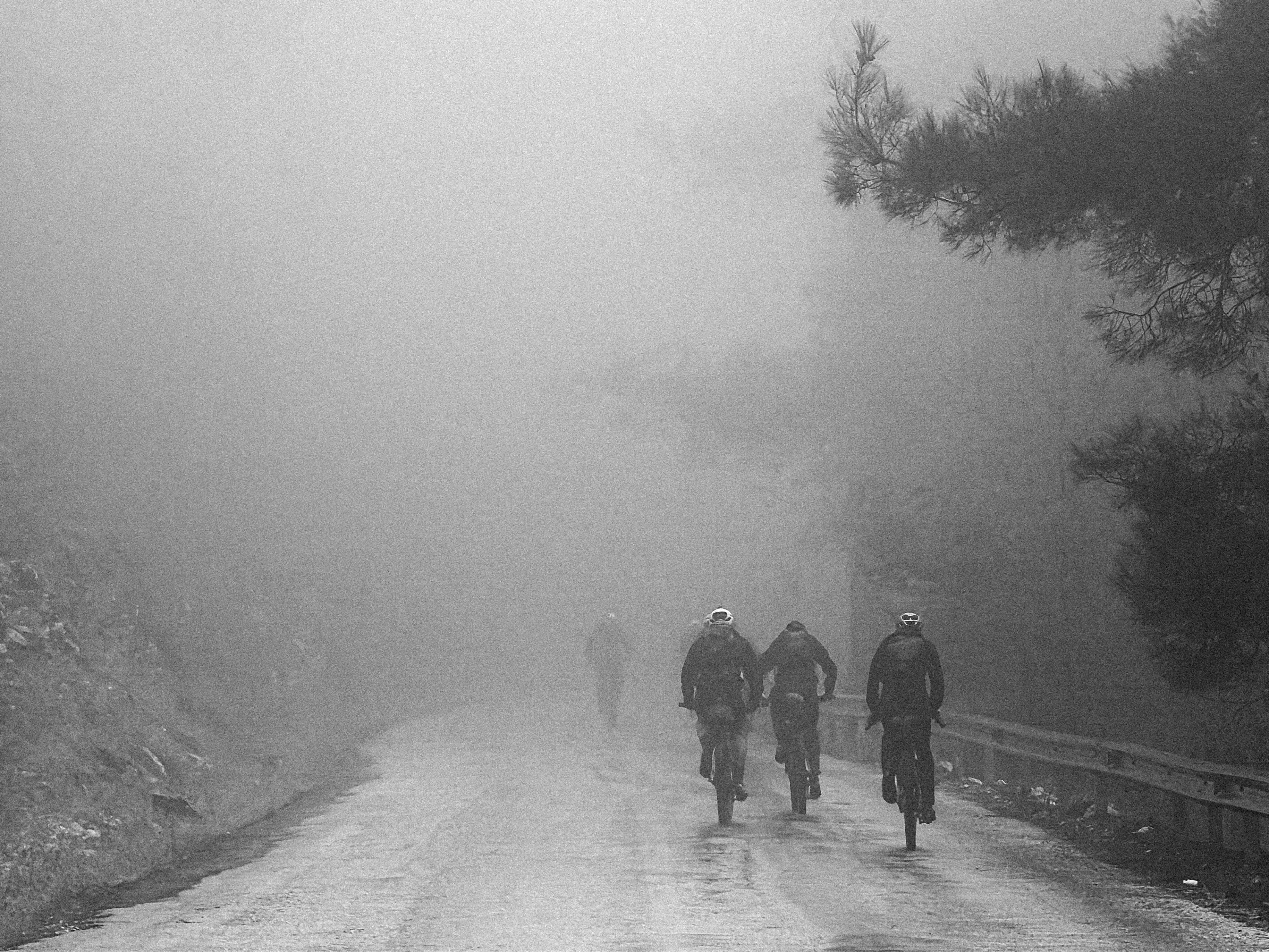
From the gun, most of us are in survival mode. The first checkpoint is a couple hundred kilometers away, where guaranteed shelter and warm food would offer a few hours of comfort in the discomfort. To reach this oasis we must face long climbs and steep descents, rocky riverbeds and hike a bikes through places bikes don’t belong. The deafening cracks of lightning followed us deep into the night.
There’s a push and pull between remaining present and thinking ahead to the next key point in any ultra race. Riding a bike such a long distance is overwhelming in the zoomed out view, almost incomprehensible. So we break it down and zoom in. 500 more feet of this climb. Zip up the rain jacket for the descent. Eat something. Attempting to think beyond that is too much. Especially when the weather and terrain have decided to team up against you, as they often do.
My plan was to sleep before the first checkpoint. To ease in to the route and err on the side of conservative, especially with the course’s heavily loaded back half.
But it was relentless, the rain. Finding shelter was few and far between, and the idea of starting the race with a wet sleep kit felt risky. So I pushed on, reaching CP1 in the early hours of the second morning.
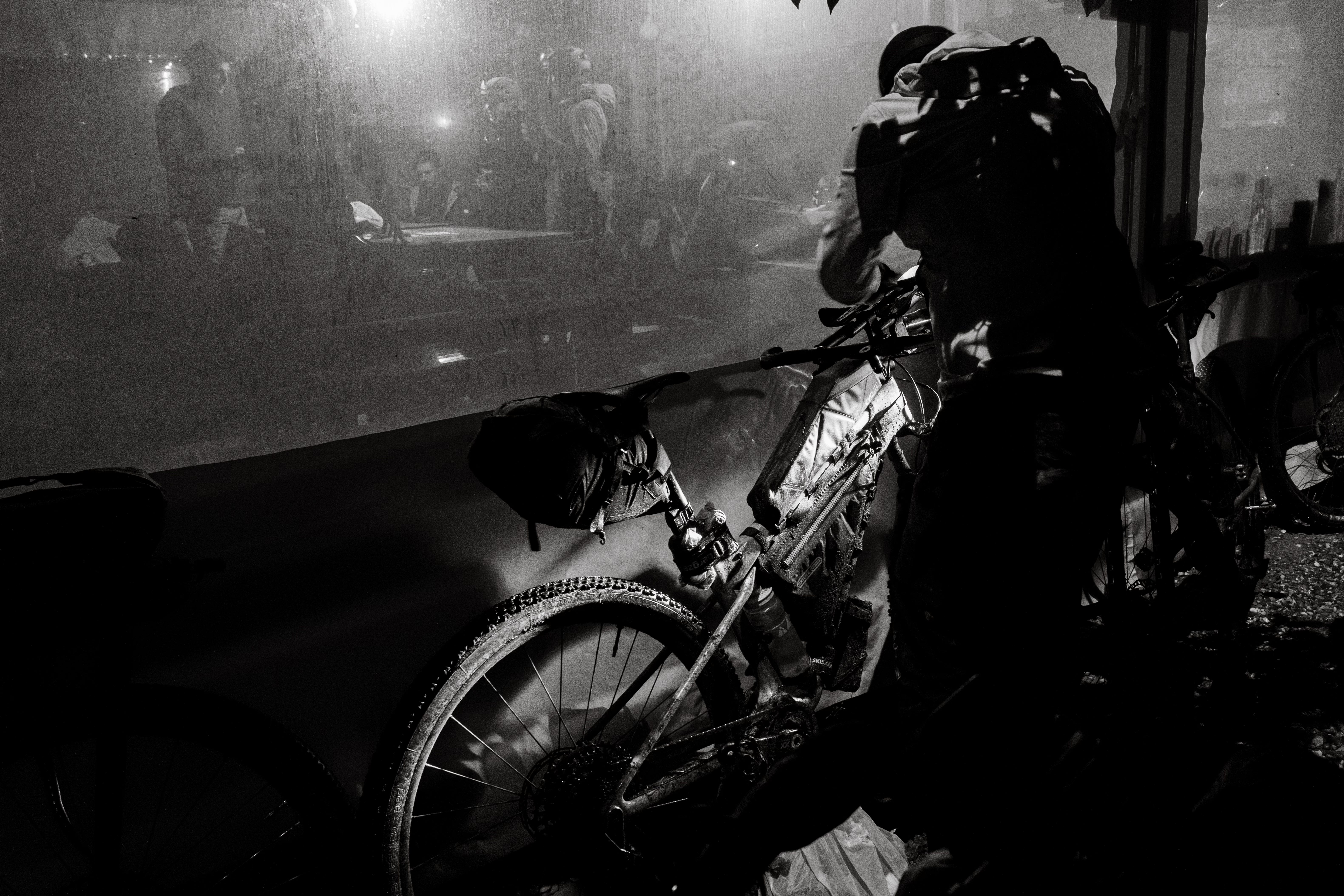
The location of the checkpoint is a guesthouse near Köprülü Canyon. There are dozens of other riders here, their presence and effort marked by the stench of wet socks and shoes drying on the small fireplace. Bowls of rice and potatoes, steaming cups of tea. The only option for sleeping is a brightly lit room packed with snoring and coughing cyclists on the floor, hardly room to walk around. I lay there, in and out of sleep.
The weather had broken, and a few hours later I’m slipping back into wet shoes, setting off into the blue hour of dawn. I feel myself forcing the motion. I’m sluggish and disconnected, like I was here as an impostor, dressed up as a pretend hardcore athlete. The tension I was so focused on avoiding is bubbling up. That pull into the race, of defining my experience based on how fast I was moving and my position on the tracker. I find myself staring at the kilometers on my bike computer ticking off to the next resupply, dreading the next climb. Out of the moment.
My legs felt okay, but my mind didn’t. What am I doing?
The only option is to move forward through the unique landscapes of this part of the world. I stop to take photos, listen to an audiobook. I reach a small village early that night and stock up on food. I stop early to catch up on sleep in a small hotel.
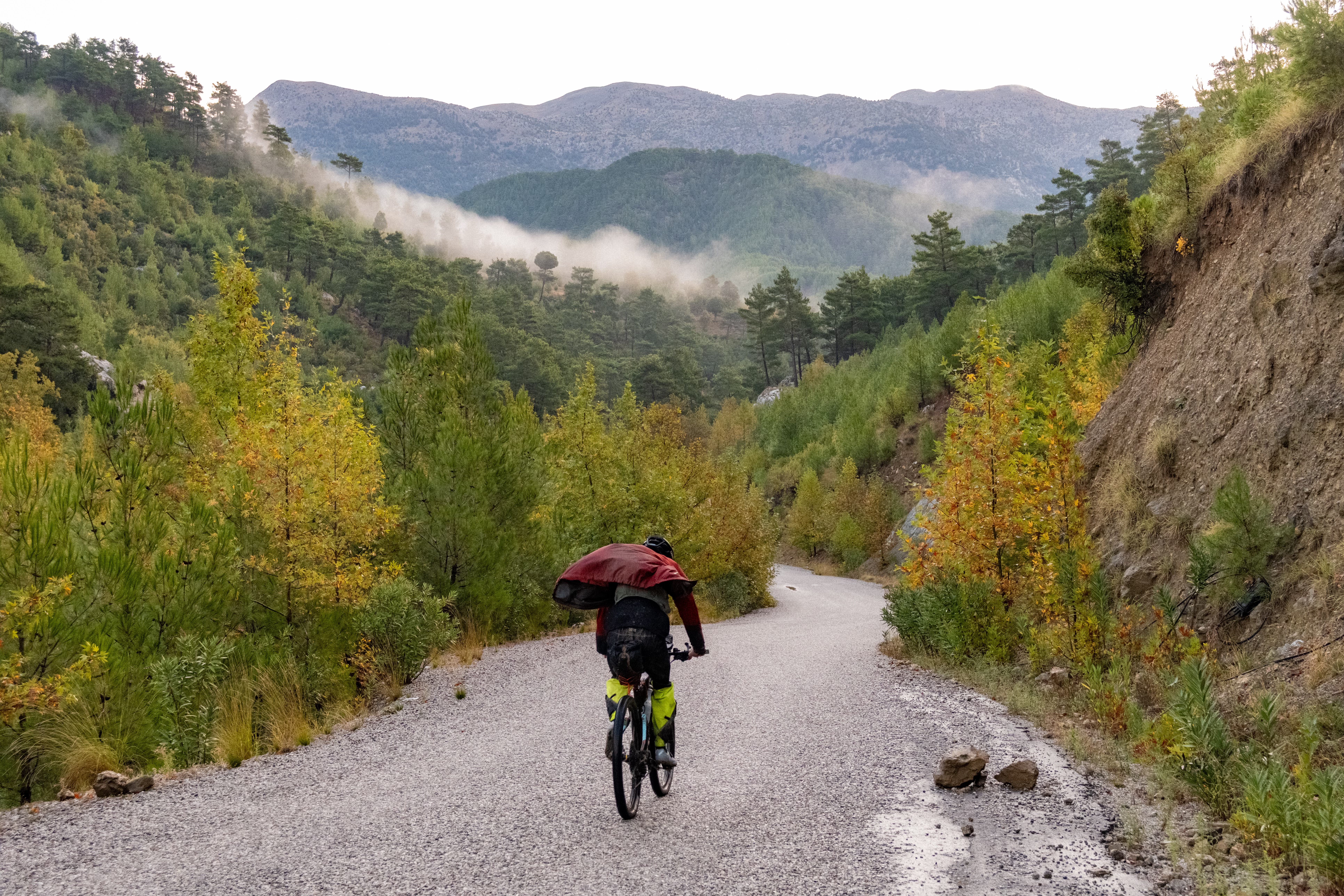
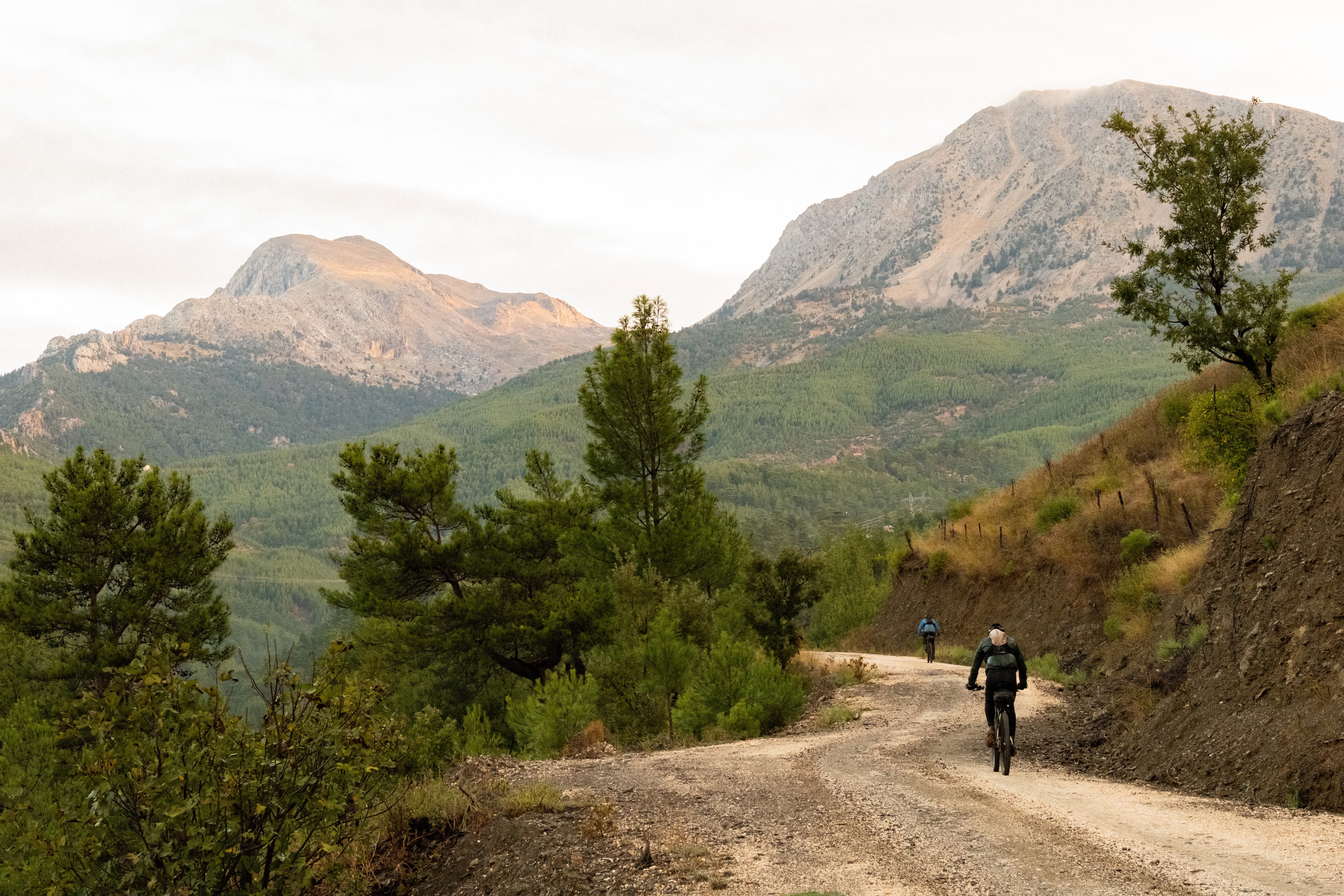
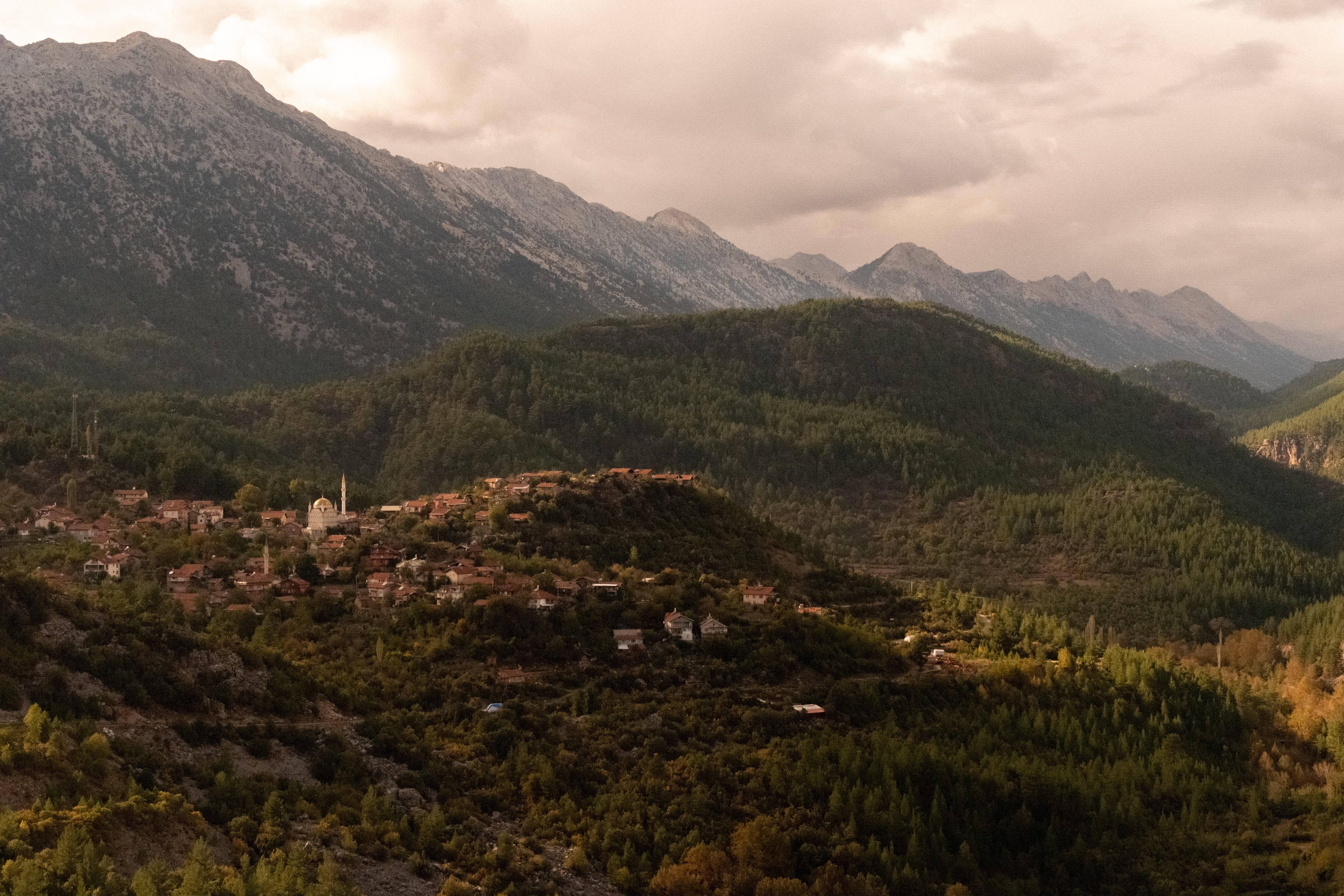
The next morning would be the highlight of the ride. Sunrise opening the mountain tops of a stunning high alpine plateau after riding through most of the night. I started to come around, despite a developing chest cold. In my experience of these events, it often takes me a few days to find my rhythm.
Then the mud came.
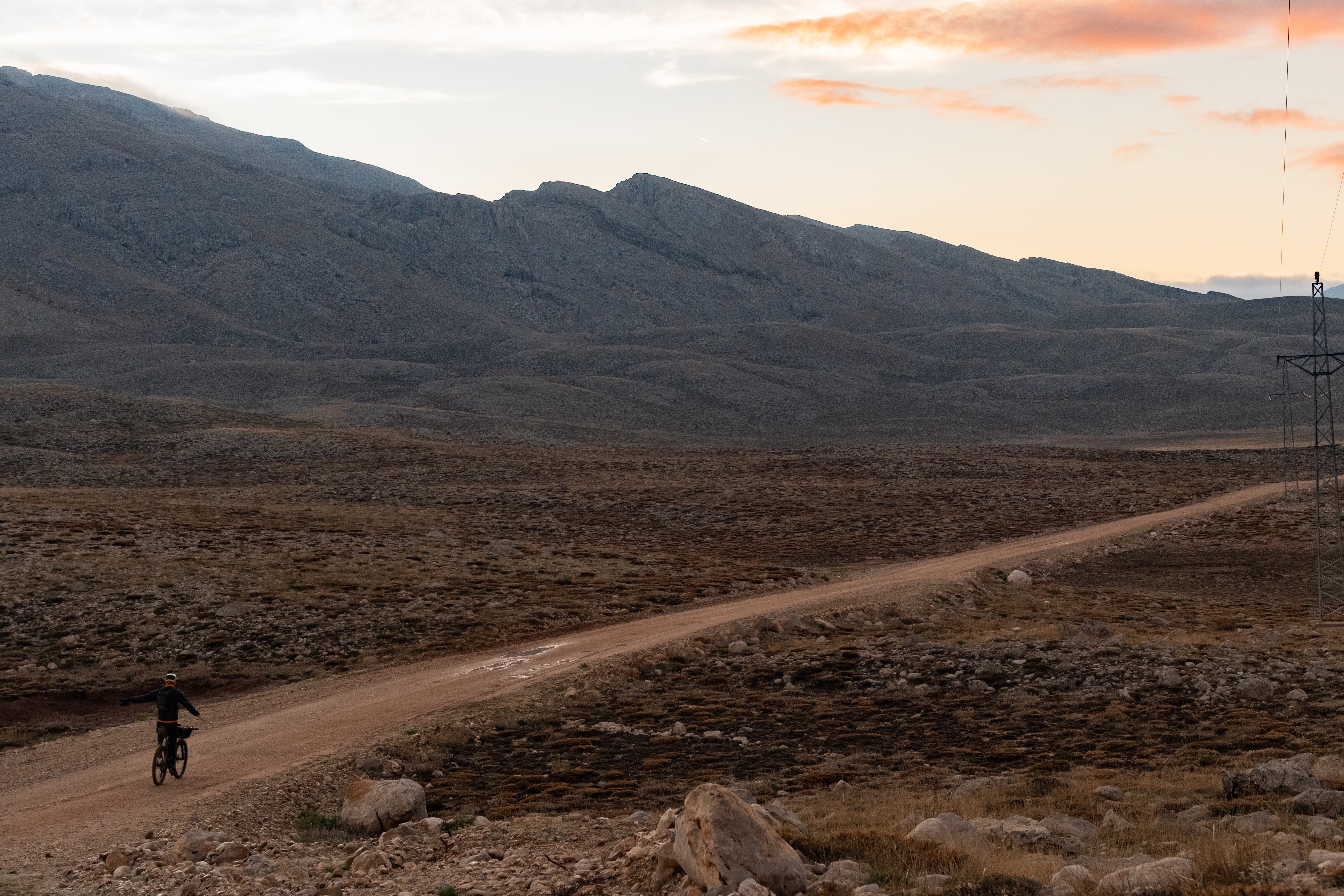
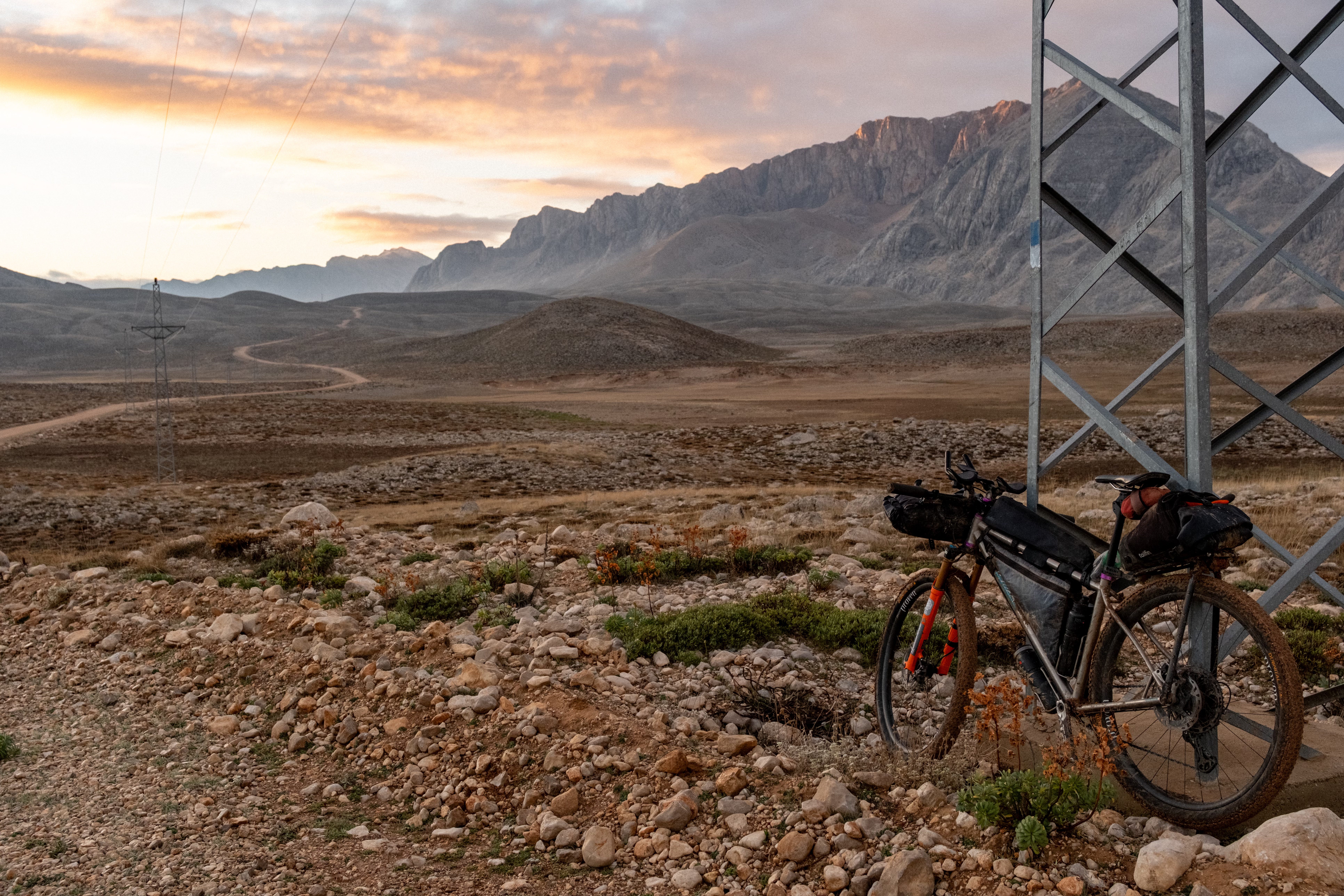

The magic of that morning was soon swept away. The heavy rain soaked the clay of the dirt roads into peanut butter mud as the sun began to suck some of the moisture out. Unrideable. Clogging drivetrains and adding kilograms to already weighed down bikes. I slice a hole in the sidewall of my tire on a sharp rock, desperately trying to plug it, sew it, superglue it. I resort to a tire boot and tube. Back to walking through the muck. This made progress painfully slow, and I was running low on food and water.
But there’s nowhere to hide, nothing to do but continue through it.
Success in any sport requires a strong self-confidence, and an expression of the ego that allows an athlete to push in a selfish way towards the goal. We celebrate the hero’s journey of overcoming challenge to prevail. The culture of this stubborn forward progress, of anti-quitting is ingrained into the sport of ultra cycling. This mentality can reap incredible rewards by pushing through boundaries we didn’t know we had. I’ve accomplished some things I’m very proud of through sheer acts of will.
But the glorification of suffering can also border on unhealthy. Everyone’s capacity for it is different, and many will tell you they never suffer out there. From the outside, we see this suffering—pushing through grueling conditions on tiny amounts of sleep or carrying our bikes for hours over mountains—as great feats of human endurance in pursuit of the finish line, the victory. We celebrate it, clicking the heart on Instagram and firing off clapping hands emojis. Is this what sport is about?
My bike is caked in mud. I often have to carry it on my back, well over 50 pounds, for long sections where the wheels can’t spin. Eventually there’s respite in portions of tarmac. A river crossing provides an opportunity to clean some of it off. But another mud pit arrives and resets it all.
It’s a blur, this day. I find myself in a village on the side of a mountain, sitting in a small shop alongside Juan Antonio Flecha, drinking instant coffee with some locals. Groups of kids come and go, asking our names and curiously checking out our bikes. We use Google Translate to talk and share stories with them as we eat baclava and warm up. I push on in search of a place to sleep for the night.
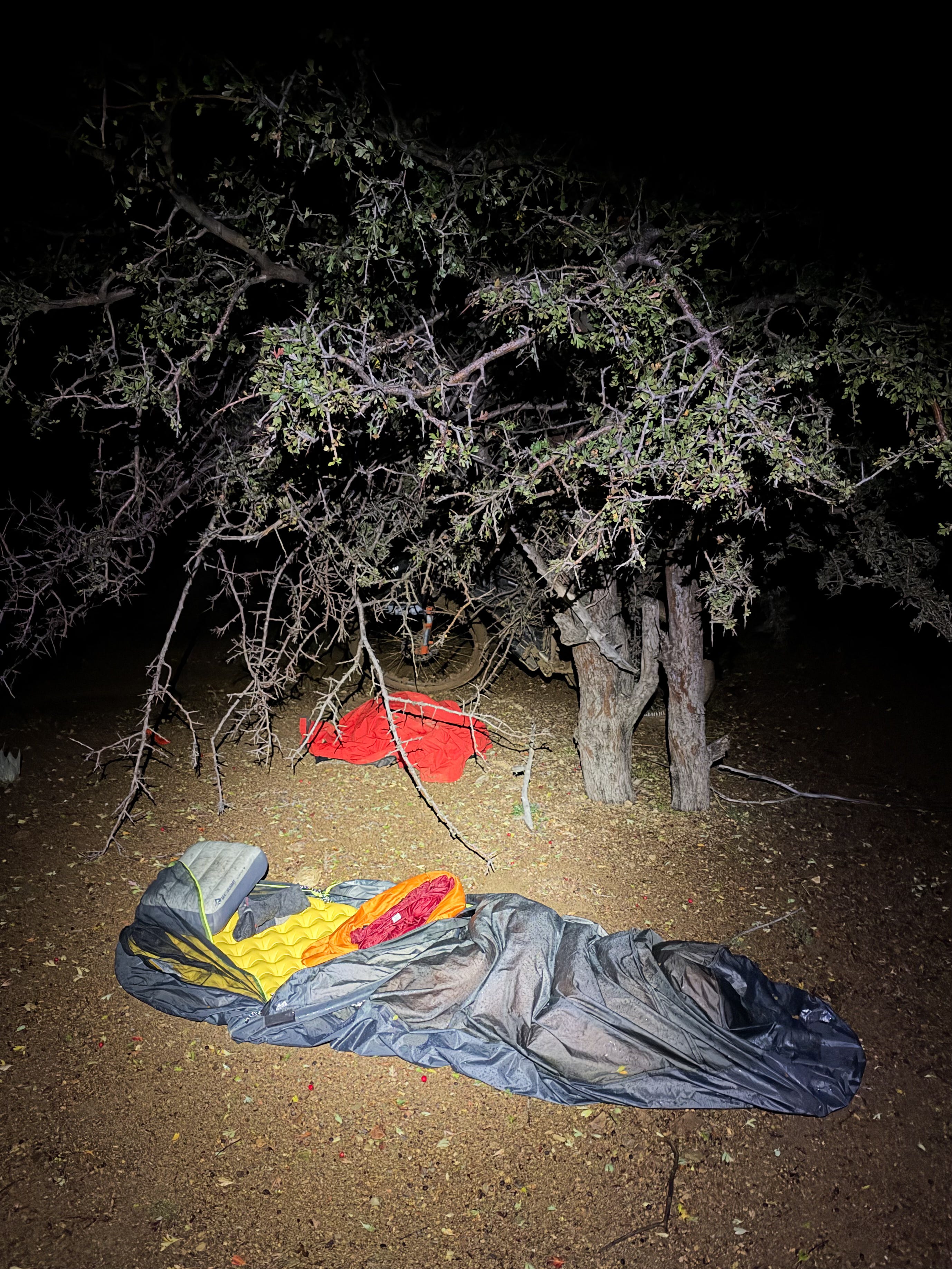
More mud. More rain. I set up my bivy under a tree and eat a freeze dried meal I warmed up at the shop. Set an alarm for 5 hours.
The next day, we receive a message from the race organization that the race has been stopped. An ambiguous, and ominous, alert.
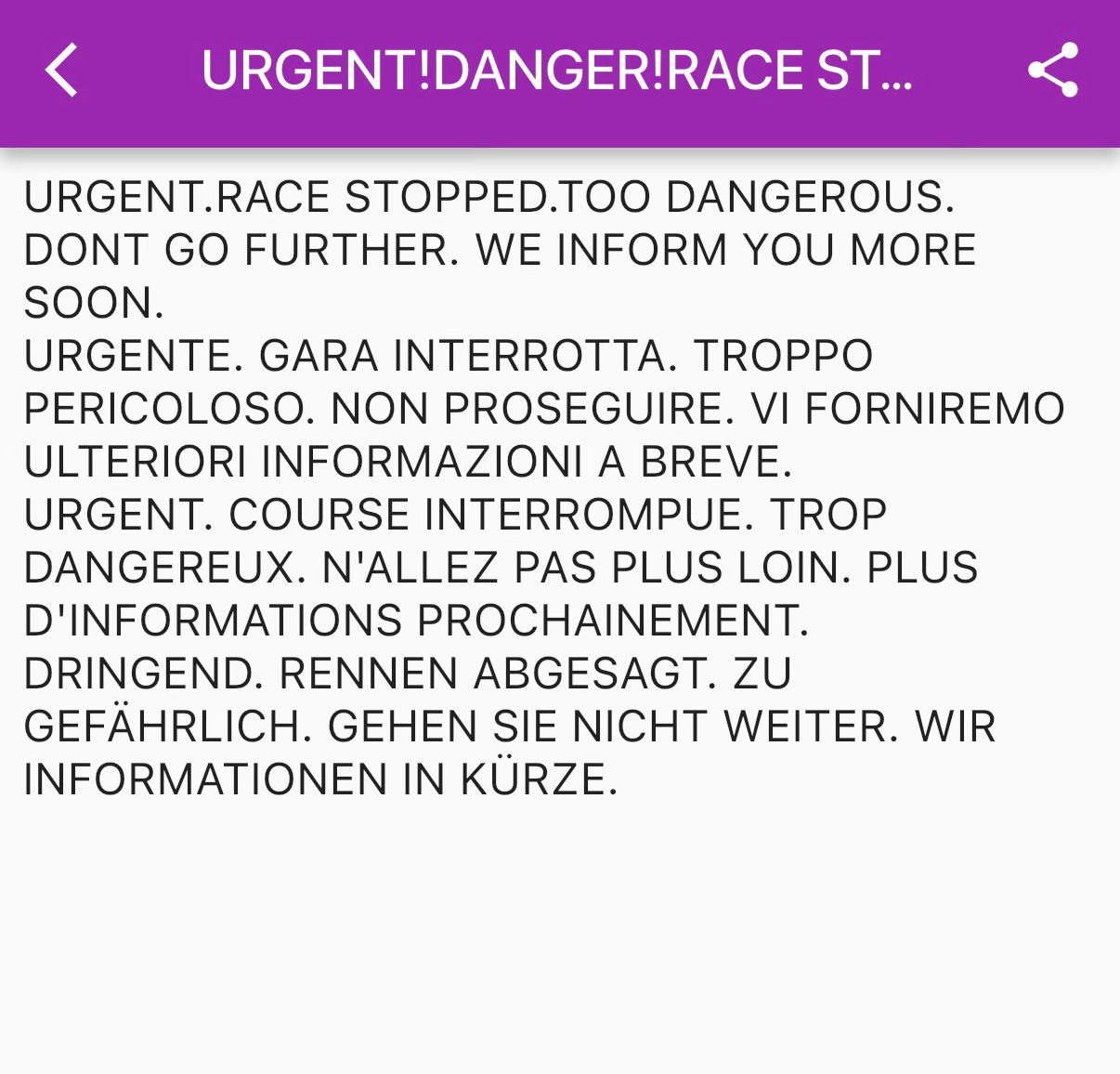
I was on a long climb when the message came through. At the top is a long plateau, followed by another potentially long peanut butter mud section before the second checkpoint. My aim for the day was to reach CP2 and take a long reset. The message was unclear and it didn’t make sense to just completely stop in my tracks. Dark clouds were brewing in the distance, so I kept going, hoping to find a place to shelter or at least keep moving in the direction of the checkpoint. Cresting the top of the climb, the storm raged. Insanely strong winds were blowing me off my bike. There was still about 100 kilometers to the checkpoint, and I was barely moving on this flat section. I checked the map, and saw a main road crossing ahead, and a town off-route that I could find shelter. So I battled through the gusts and found a cafe with a handful of other riders already sheltering, stuck in limbo as we waited for more information about the state of the race. It would be a few hours until the next message came through:
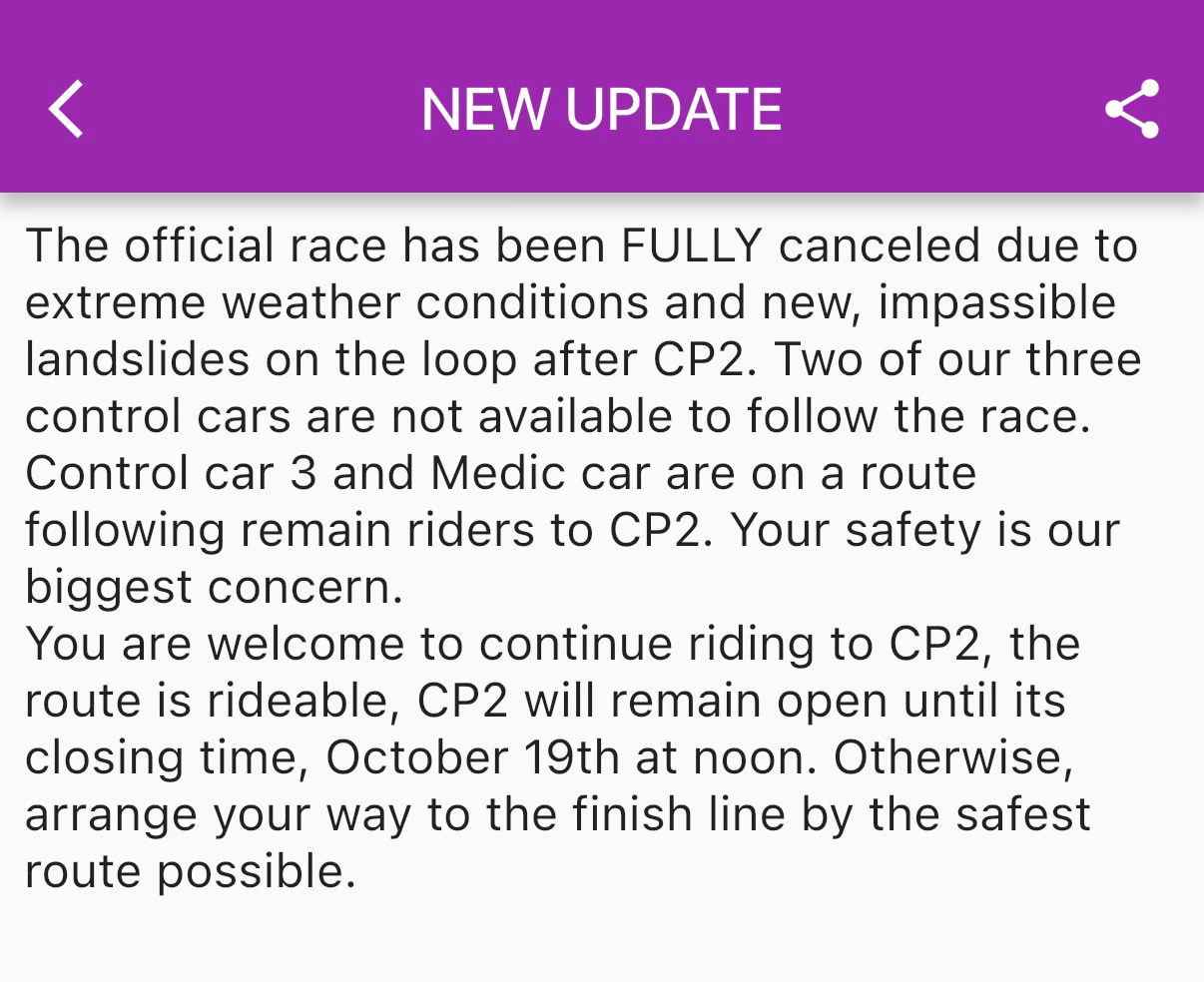
Well, that’s it then. Simultaneous feelings of disappointment and relief, of confusion and let down. It would be much later that more details were made available about the situation.
Phase Shift.
I can’t help but feel a disturbance in the force in competitive endurance sport. The hype machine around doing “epic shit” has ballooned tremendously, in part thanks to the glorification of extreme athleticism on social media. The drive to capture and monetize attention on social media has extended now to sport, and the best way to reach success and glory in sports like ultrarunning or triathlon or cycling feels as much about the online persona and image presented as it does the race result or performance.
In this particular case—Nelson Trees' Mountain Race series—part of the draw for any of us interested in participating are the unique challenges and remoteness of them. Rarely would we get the opportunity to ride in the very obscure corners of Morocco, Kyrgyzstan, or Türkiye be it not for an organized event like this. But there’s also a lot of hype. Full on media crews with professional photographers, a daily rolling podcast, and applications and waitlists to get the chance to partake. I’ll admit it’s why I’ve been drawn to them. The allure of racing against the sport’s best in these wild places is powerful. But after the events of Taurus I can’t help but feel a sense of questioning all of it. Why are we really doing this? Is it truly worthwhile to slog through the mud and dangerous conditions for the sake of it?Or are we caught in the hype machine of generating impressions online?
I think ultra cycling is undergoing a phase shift similar to what ultrarunning went through over the last decade or so. Ultrarunning used to be pure and simple: a tight-knit community of athletes pushing themselves in the mountains for personal fulfillment. Now the sport has grown exponentially, with huge amounts of money being funneled across big events, big brands, and athletes with big contracts and social media presence overshadowing the fundamental goal of the sport. There’s a performative side that feels disconnected from the simple freedom of moving through the mountains.
Ultra cycling is seeing a growth in participation across hundreds of races all over the world, which is fantastic. But as events jostle for relevancy, and athletes seek to make a career in it, the pressure to not only perform has grown, but also the pressure to monetize the image portrayed online. Of course, this only applies to a certain echelon of the fields of these races; the athletes who are higher profile and sponsored are a tiny fraction of the population. But they often generate the most engagement, the biggest impact. And they probably have the most at stake, too. To actually make a living or at least make ends meet to travel the world doing multi-day long events and the equipment required, requires selling said gear while also performing. Races are getting highly competitive. To gain that competitive edge one must be willing to push the envelope, to take risks.
Yes, the weather was pretty unpredictable and to a certain degree, unprecedented. When Nelson scouted the route the last two years during this time period, it was much milder. But go to any high mountain environment in the middle of October and you’re guaranteed to have unpredictable weather, especially as climate change continues to upend what we think of as “normal” or “predictable.” The reality is that a small group of riders at the very pointy end of the race ventured into that environment—that weather—in pursuit of competition. This meant the media teams, who follow the leaders, also ventured out there. Regardless of the emergency kit they did or didn’t have, it was clearly not a place to be on a bike that day. Even the most advanced weatherproof clothing or warmest sleeping bag won’t protect you against that kind of environment.
I bring this all up not as a critical view of the race organization or any of the individual riders who were up there, but instead as a greater critique of what we’re all doing here. I think adventure sport is a beautiful thing, and should be celebrated. But when suffering becomes overly glorified, and stubbornness to finish overpowers safety, I worry we’ve lost the point.
I was nowhere near the front of the race, so can’t relate to the experience of those in the much more dire situation in the mountains. From the conversations I’ve had with those who were up there, it’s clear cancelling was 100% the right call. I wanted to at least reach CP2. I’m not sure how much farther I would have made it past there, knowing the weather that was coming combined with the huge gaps in resupply and shelter opportunities, combined with my compromised equipment, sickness, and dwindling mental fortitude. For me, the reward didn’t seem to outweigh the risk.
Does this make me weak? A quitter? There’s often a fine line between difficulty and danger. The competitive environment often makes this distinction even harder to see clearly.
I don’t claim to have any of the answers to these questions. I’m just a dude who likes to ride his bike and push himself in new places. I question the value of pursuing extreme athleticism, of competition being the way I want to express my athletic experience. The blend of athletic with creative is what seems to inspire me more than any glory of a podium or overcoming the suffering to reach a finish line.
I’m sure many more reflections will grow from this trip as the dust (and mud) settles over the coming weeks. I’ll share more in the forthcoming issue of the print magazine this winter. Writing is such an important medium for me to alchemize the storm in my mind into some kind of sense, so it’s helpful to put it onto paper.
If you’ve made it this far in my rambling, thank you. And thank you to Nelson and the whole Mountain Races team for acting swiftly and calmly in the storm to ensure the safety of all participants at the Taurus Mountain Race, and to even provide this adventure in the first place. It’s no easy feat to organize an event of this scale, and I can only imagine how difficult the entire situation was from the inside.
Big love,
-jackson
Well written and well considered. I had a similar experience out there. My only disagreement would be that I don’t think this is all driven by social media engagement. That’s always in the mix, and has been for over a decade now, but met plenty of people out there who were in it for personal reasons and human reasons. The front of the race is hugely driven by media, but the shallowness of that shows through clearly: the same riders posting the same pictures over and over, with no context or story, because they have to - for the sponsors. The flip side of that is the real stories, people, and connections that happen out there. No matter if a race is a circus or not, these events will always have day after day of the sacred personal moments of quiet endurance.
Excellent piece! I've struggled the last few days with the thoughts that I am 100% at fault for the cancellation. I do regret my decision in hindsight, but one thing I can say for certain is that it was not for "epic shit" or to show toughness. I would not have shared how absolutely shit I felt mentally during the early parts of the race if this were the case. I didn't want to be there at all, and I'm fine admitting I was not mentally up for the challenge right from the bat. I was only coming around that morning it got canceled. I think, as odd as it sounds, the forecast and upcoming terrain made me feel better. My legs were good throughout, and I was just trying to find a way to get my mind in sync with that. I saw a good day ahead, which, as it turns out, was dead wrong.
The difficulty I run into in assessing the decision to continue with hindsight is considering perspective in that moment and the "sheep" mentality: that others were up there, so it must be OK. The other person I was with and I asked the media crew if they had any more intel on the situation up high than we did. This is strictly against the rules, but we thought that in this case, they might let us know. They did follow the rules, and fair play for that, but the reality is that I don't think they had any more info than us. The race had already been stopped by then, but there was no cell reception and the satellite messengers they used were not working. We made a judgment based on how the weather was progressing and with only the knowledge of the forecast I checked in the AM. It seemed to be drying, and that was my number one concern. Wind is tough, but manageable. Cold is also very manageable with all the layers I had if it is dry. In a way, having a lot of gear, which I did, almost made it worse because it gave a false sense of security. Same with having the experience of riding in those conditions like in CO or in New England in the winter. I can say for sure I would not make that decision in training, but likely more so for comfort than safety, in the same way I would not ride for hours through peanut butter mud in training. On the safety side, though, I would almost never ride up to that altitude in CO at this time of year unless I picked a perfect day. Another factor is pressure from ourselves. What keeps me going in an ultra is knowing how much I will be disappointed in myself if I scratch. This is purely personal. I think this is a helpful pressure at times, but also has led to me riding 700km of AMR with a screwed IT band and destroying my frame in Unbound XL a few years ago. I guess it's a stubbornness.
I also am not sure how much media plays into it for everyone up front in this race in paricular. I am very confident it does not for people like Ulrich and Adrien (the rider I was with). I'm concerned that some may think my piece on the experience was way too dramatic, but I also want to share how I actually felt in that moment, and that's how I felt, plain and simple, which, as you rightfully pointed out, is partly my fault since I got myself into that situation in the first place. Now, looking back, my mind has done the classic "type 2 fun" moderation and made it seem more tame, but in the moment, being up there when the rain started again, I was afraid. The distinction I think I need to make is that it was not fear for that moment, but fear of the fact that my safety relied on nothing going wrong that might force a prolonged stop. I think the reality with that section, now that I know it, is that that risk would be there 100% of the time. If you had a mechanical up there and had to stop, you might be there overnight with no real shelter and a possible shift in weather. That is an inherent risk with sections like that, especially going in relatively blind. My job was to minimize risk, and that's where we should have made different calls (unless we had the news that the race was canceled if the InReachs had worked, in which case we would not have had to make that call).
I plan to write more on risk-taking in ultra racing, how it relates to that in training, and why our minds have very skewed perceptions of risk. Everything we do is risky. This means our baseline is shifted to the point that pushing limits can become reckless without us even thinking about it. This even extends to sleep deprivation. Objectively, this is not healthy or safe, but we do it anyway. Even 5 hours of sleep in a race, which might be considered a lot, is not nearly enough given the load on our bodies.
Anyway, sorry for the rambling response. I am going to struggle with processing thoughts about this for a long, long time.