


You know the drill. Alarm goes off on the black rectangle. The overnight notifications light up the screen. In your half awake, half asleep state you’re into the scroll, without even realizing it. Instagram stories come and go in their 20 second bursts between ads for stuff we don’t need. Maybe you’re more disciplined than I am or you’ve successfully wrestled free from its grip, but it’s far too often I find myself in this wrestling match.
We’ve created—or slowly been force-fed—a system designed to keep us scrolling, our attention fragmented across millions of little hits of content, and trained to feel the pressure to post and share our lives online. It’s ingrained now. We justify the distraction and comparison of the chronically online lifestyle to embrace the positives: the promise of connection, validation, inspiration, or brand-building. Is it inherently net positive or negative? I don’t know.
But most of it is surface level. The pendulum of social media and the internet generally swings towards breadth over depth and quantity over quality. Noise over stillness. AI is now accelerating our capacity to generate a high volume of information that averages to center, casting an illusion of “productivity.”
Because attention is now the dominant currency, it’s become a race to the bottom. Most of what we scroll through is free. The algorithm rewards content that is shortened, tightened, and made to hook us within seconds to be digestible by our diminishing attention spans. It’s now rare to even spend a handful of minutes reading something, let alone giving a long-form essay space to breathe and develop. This essay is about 1,500 words. When was the last time you sat, uninterrupted, to read a couple thousand words? Even Substack, which positions itself to be the home for independent, long-form writing on the internet, falls into this trap. A small proportion of the people who subscribe here actually read my posts, and fewer read through to the end.
Last year, I decided to make a magazine. I wanted needed to express myself creatively, away from the internet. Take a step out of the stuffy, crowded room of social media, even briefly, into the fresh air. I love sharing writing and photography here on Substack, which feels a little less fragmenty than Instagram. No matter how you dress it up, though, it is still very much a social media platform, inherently vulnerable to the mysterious decisions of the algorithm gods and the infinite feed. I noticed myself spending more time scrolling than reading and writing, and felt ready to direct my energy into the long form, something tangible and algorithm-free. In print.


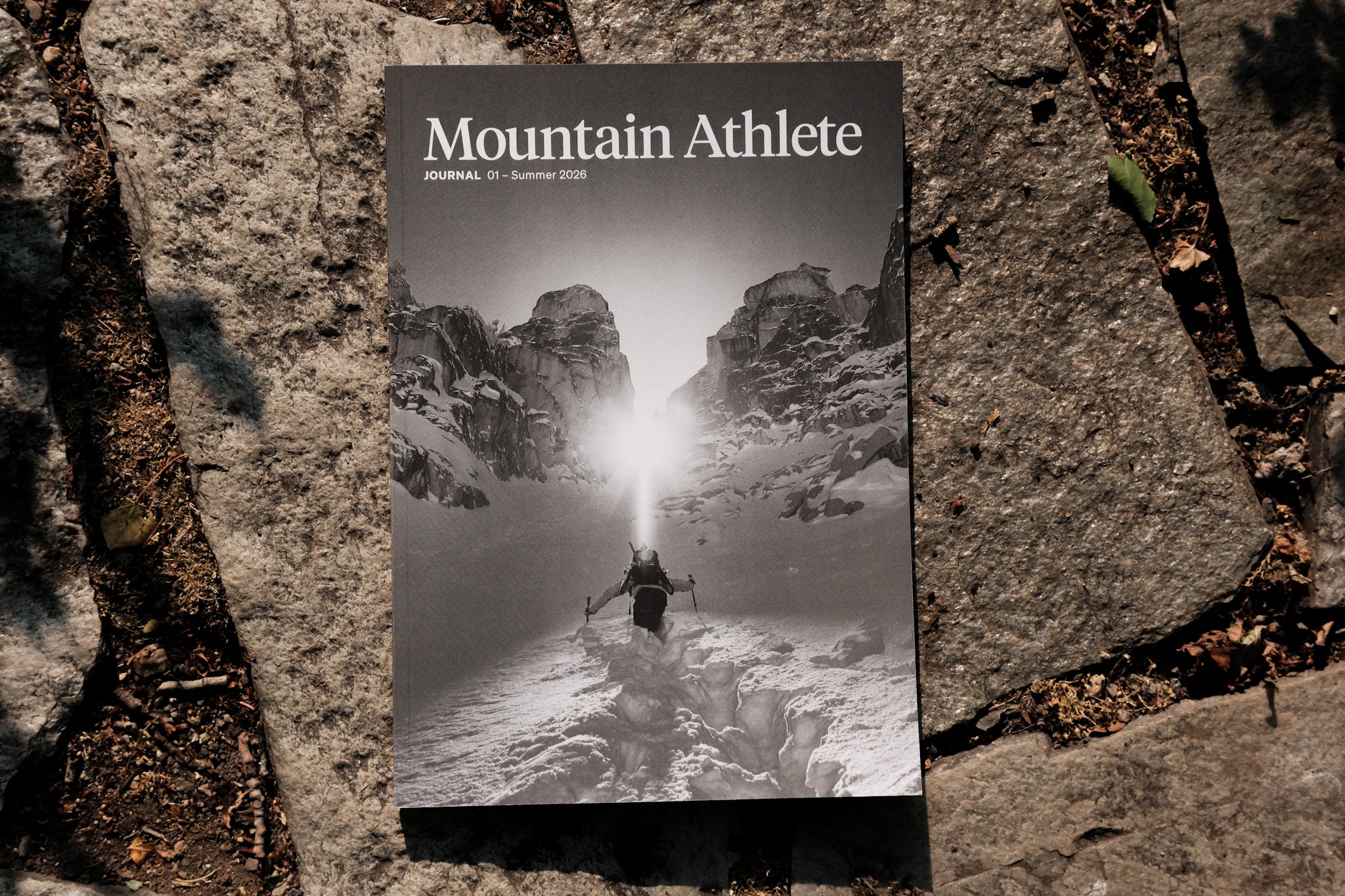
After completing a full round of production on the first issue, from the design to writing, to working with the contributors and putting it all together in something that’s greater than the sum of its parts, it’s exactly what I was looking for. It’s a beautiful thing to blend my love for mountain athletics with creative expression into a tangible object I get to share with others. The feel and experience of reading something on paper can hardly be replaced by a screen. I think it might be my dream job.
But herein lies the paradox, the awkward conundrum I now face. The reality is that most of us spend a lot of time online. It’s where we discover things. Many of the contributors to the magazine come from Substack and Instagram, and a significant chunk of the folks who subscribe find it through these platforms.
I could make the greatest, most beautifully designed magazine with the deepest, most compelling stories and art but it doesn’t matter if no one knows about it. I suppose there’s value in it being a personal piece of art that provides meaning and fulfillment to me, the individual. But it costs real money to make. Our incredible contributors deserve to be paid for their work, and I’ve committed to paying each one of them, albeit modestly, for our forthcoming issue. This part of the mission is very important to me. Conversely, no one owes us anything, either.
Books don’t get written without readers. Magazines don’t work without subscribers. And, I suppose, YouTubers and social media influencers don’t get paid without views, followers, and impressions to generate ad revenue.
At the end of the day, in order to make it all work, we as artists must reach an audience. In my case that’s selling subscriptions to the magazine and finding brands that are willing to financially support it. In 2026 that means having an online presence. I believe in preserving the beauty of print media and long-form storytelling in the age of short form, quick fix, fragmented content. So it feels a bit antithetical to use that medium to create something that stands as an antidote to it. It’s not as convenient or instantaneous as an online blog or digital magazine. It’s not as ephemeral, either. That is the point.
I’m also committed to keeping the stories, the art, the poetry, and the photographs within the magazine only in print form. Not republished or shared online. They aren’t made for the screen, they’re made for the page. I can’t promise the quality, or convey the true depth of what’s in those pages through an abstract Instagram post or online excerpt, floating through the river of the algorithm. Trust is created between me, the editor, and the contributors, the advertisers, and critically, the reader. The only way to read it is by subscribing, or seeing it on a friend’s coffee table.
I’m hardly alone in questioning our relationship with social media or AI. I’m not the first to grapple with these questions. I’m not sure I have any answers. I’m just doing something that feels right to me, through my own kind of action. It’s easy to concede defeat and continue plugging in to the matrix. Not only with our money, but perhaps even more importantly, our time. Meta and other big tech companies work and continue to dominate because we pay them with our attention, which is more valuable to them than money. How we spend our time is how we spend our lives. I, for one, spend too much time on social media and in front of the little rectangle, more so now that I’m building a publishing company.
Maybe it comes down to intention. Complex, big questions like these are hardly black and white. Instagram and Substack do provide something the magazine can’t. I enjoy sharing photos and words here, and not everything can make it into the pages of the magazine. I find inspiration and entertainment among the bits of art and creativity online. I’m struggling with all of this, and the only way I know to figure it out is to write about it.
I’m not asking you to buy my magazine, or quit social media. I’m asking you—and really, myself:
How do we really want to spend our time and our money?
How does it feel to scroll through Instagram for an hour versus sitting with a book or magazine?
How much of our time is spent creating versus consuming?
I like to think that short-form digital media will never totally replace the art of long-form, print media. I want to believe we’re not headed down a path where art isn’t really valued anymore. That there’s beauty and purpose in taking our time, resisting instant gratification in both the creation and reception of it. Will AI just write all of our books, paint all of our paintings, produce all of our music? Will 20 second vertical videos, 20 word captions, and the endlessly fleeting feed be what we mean by art?
Only if we want it to.
I read your posts Jackson! But I am also a committed reader in general Instagram is more of a brief bit of every now and then entertainment for me but I am the minority. The struggle is real! But isn't that the point?
I've been thinking about this ever since I read it last week, and the more I think about it, the more I like how this gives us a more hopeful pathway than the narrative we're used to hearing about this stuff. Yes we exist within hostile technological systems, but if enough people decide they've had enough, and want to point their attention back to good and wholesome things, we can dismantle those systems – or at least blunt their edge. Adventure helps us do that because it reminds us that we are real.